

Luxury Is Moving Beyond the Front Door
What West Palm Beach’s new generation of residences says about the changing expectations of luxury buyers
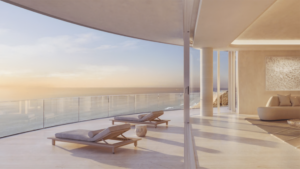
I recently walked into the sales gallery for Banyan Tree Residences West Palm Beach and, for a moment, it didn’t feel like a sales gallery at all.
It felt like I had walked into one of the brand’s hotels.
That was clearly intentional. The finishes, lighting, atmosphere and service had been curated to create the experience of the building before the building itself was complete. The gallery functioned almost like its lobby.
I found that more interesting than any individual finish.
Douglas Elliman Development Marketing represents Banyan Tree Residences, so I had gone there to see the project firsthand. I left thinking less about a particular condominium and more about what this generation of South Florida new development is telling us.
The definition of a luxury residence is getting larger than the residence itself.
The building as part of daily life
For a long time, evaluating a condominium meant beginning with fairly predictable questions.
How good is the floor plan? What are the views? How large is the terrace? What are the finishes? What amenities does the building offer?
Those things still matter. But projects like Banyan Tree suggest another layer has become increasingly important.
Hospitality.
Not hospitality in the sense of having someone at a front desk. The more interesting idea is that the experience of a very good hotel—service, wellness, privacy, atmosphere, attention to detail—is being translated into a place where someone actually lives.
There is a meaningful difference between a building that has amenities and a building conceived around how a resident moves through an ordinary day.
That was what I felt in the gallery.
It wasn’t simply presenting expensive materials. It was presenting an environment.
And increasingly, that environment doesn’t stop at the building’s entrance.
Then you walk outside
The other thing that struck me had nothing to do with the building.
It was West Palm Beach.
I’ve watched downtown change over the years, but the transformation of the last five years has been remarkable. What once might have been considered primarily in relation to Palm Beach across the Intracoastal has developed a much stronger identity of its own.
Banyan Tree happens to sit almost in the middle of that change.
Restaurants, shopping, culture, business and the waterfront are woven into the surrounding city. Palm Beach itself is close enough to reach by bicycle or even on foot.
That changes the value proposition of the residence.
For much of South Florida’s history, one of the clearest expressions of luxury was separation. More land. More privacy. A gate between you and the road. A waterfront estate where much of what you wanted was contained within the property.
There is still enormous appeal in that. I understand it completely.
But West Palm Beach luxury real estate is increasingly demonstrating that there is another buyer who wants privacy at home without necessarily wanting isolation from everything else.
For that buyer, being able to leave the building and walk somewhere interesting is not a compromise in luxury.
It is part of it.
Two different versions of exceptional
I find the contrast particularly interesting because South Florida can now support both ideas at a very high level.
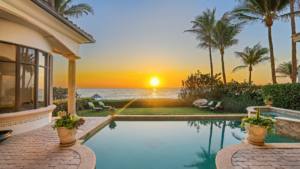
Someone can choose a waterfront home in Ocean Ridge where the luxury is precisely that very little happens outside the front gate.
Someone else can choose a highly serviced residence in downtown West Palm Beach because so much happens just beyond the lobby.
Neither choice requires explaining the other.
What has changed is the sophistication of the market.
As South Florida’s luxury market has evolved, new development has become more specific about the life it is designing around. Developers aren’t simply competing to build more elaborate condominiums. They are making increasingly distinct assumptions about how their buyers want to spend their time.
That may be the more revealing way to look at the current South Florida new-development cycle.
Not simply at what is being built, but at the life each building assumes its residents want to have.
What is outside matters too
Standing in the Banyan Tree gallery, I could understand the appeal of the hospitality model immediately.
But when I walked back outside, the other half of the idea became clearer.
A beautifully designed residence can control almost everything inside its walls. Service can make life easier. Wellness can be integrated. Privacy can be carefully considered.
The building cannot manufacture the city around it.
West Palm Beach has had to become interesting enough for walkability itself to feel valuable.
Five years ago, I don’t think I would have looked at downtown quite the same way.
Today, I could imagine living there.
That may say as much about the transformation of West Palm Beach as any new tower on its skyline.